

CoreWeave's Mixed Q4 Sends Shockwaves Through AI Infrastructure Stocks
The AI infrastructure investment space is facing fresh turbulence this week, as CoreWeave (CRWV) reported a mixed set of fourth-quarter results that have rattled confidence across a cluster of closely watched AI-adjacent stocks. According to reporting from TipRanks published in the past 48 hours, the fallout has been swift and painful — shares of Nebius Group and Iren Limited have both declined sharply in sympathy with CoreWeave's disappointing print, raising urgent questions for investors who had bet heavily on the AI compute buildout thesis.
The broader market backdrop has not helped. On the same day CoreWeave's numbers hit the tape, U.S. wholesale prices came in hotter than expected — up 0.5% from December and 2.9% year-over-year, according to data reported by Yahoo Finance on February 26, 2026. That inflation surprise sent the Dow Jones Industrial Average sinking, with Investor's Business Daily describing a broad selloff in growth and technology names. For AI infrastructure companies that depend on cheap capital and risk-tolerant investors, this is a particularly dangerous environment.

Photo by Alex Luna on Pexels | Source
What CoreWeave's Q4 Actually Showed
CoreWeave, the GPU-cloud company that went public as one of the most anticipated AI infrastructure listings in recent memory, delivered what analysts are characterizing as a "mixed" fourth quarter. According to TipRanks coverage, the company showed strong revenue growth consistent with booming demand for GPU compute — a trend that has powered the entire AI infrastructure sector. However, the results also flagged concerns around margins, capital expenditure intensity, and the pace of customer diversification, all of which are critical metrics for a business model that burns through enormous amounts of cash to build and operate data centers.
The specific figures disclosed in CoreWeave's Q4 report were parsed closely by Wall Street analysts. While top-line growth remained robust, the cost of delivering that growth — particularly in an environment where energy prices and hardware procurement costs remain elevated — appears to have come in above what the market had modeled. Investors who had priced CoreWeave shares on an optimistic trajectory were forced to recalibrate, triggering a sell-first reaction that spread quickly to peer companies.
Key concerns flagged in analyst notes this week include:
- Higher-than-expected capital expenditure guidance for 2026
- Customer concentration risk, with a significant portion of revenue tied to a small number of hyperscale clients
- Margin pressure from rising energy and data center operating costs
- Uncertainty around the sustainability of GPU pricing power as supply chains normalize

Photo by Nana Dua on Pexels | Source
Why Nebius and Iren Are Caught in the Crossfire
The contagion spreading from CoreWeave to Nebius Group and Iren Limited reflects a broader dynamic in how markets currently treat the AI infrastructure sector: as a correlated trade. When one major player in GPU-cloud or AI compute disappoints, investors tend to reassess their assumptions across the entire category simultaneously.
Nebius Group, the Amsterdam-listed AI infrastructure company that has been rebuilding its cloud business after its separation from Yandex, is particularly sensitive to shifts in sentiment around AI compute demand. According to market data reported this week, Nebius shares moved lower in lockstep with CoreWeave's decline, despite the two companies operating in somewhat different geographies and with different customer bases. The read-through, analysts note, is that if CoreWeave — arguably the best-capitalized pure-play GPU cloud in the U.S. — is showing margin strain, the pressure on smaller or earlier-stage peers is likely even more acute.
Iren Limited, the ASX and Nasdaq-listed company that operates high-performance computing infrastructure with a focus on sustainable energy, faces a similar dynamic. Iren has positioned itself as a green-energy AI compute provider, a differentiated angle that had attracted significant investor interest. However, when the sector sells off broadly, differentiation stories tend to get temporarily ignored in favor of indiscriminate risk reduction.
What this means for investors holding Nebius or Iren:
- The selloff may reflect sector sentiment more than company-specific fundamentals
- Both companies will face heightened scrutiny on their own upcoming earnings disclosures
- The correlation to CoreWeave creates both risk and potential opportunity if the market overreacts
- Rising U.S. inflation data adds a macro headwind that affects all capital-intensive growth companies
Bank of America and Nvidia: A Related Signal
Adding another layer of complexity to the AI infrastructure narrative this week, Bank of America reset its Nvidia price target following Nvidia's most recent earnings, according to reporting from TheStreet published in the past week. Nvidia remains the dominant supplier of the GPU hardware that companies like CoreWeave, Nebius, and Iren depend on entirely for their infrastructure buildouts.
The Bank of America price target adjustment — the specific new target was noted in TheStreet's coverage — reflects a careful recalibration of Nvidia's near-term earnings trajectory against a backdrop of enormous but potentially lumpy demand. Hyperscale customers have signaled they will continue spending aggressively on AI compute infrastructure through 2026, but the timing and distribution of that spending remains difficult to model precisely. For companies downstream of Nvidia in the AI infrastructure chain, this uncertainty compounds the challenges already visible in CoreWeave's Q4 results.
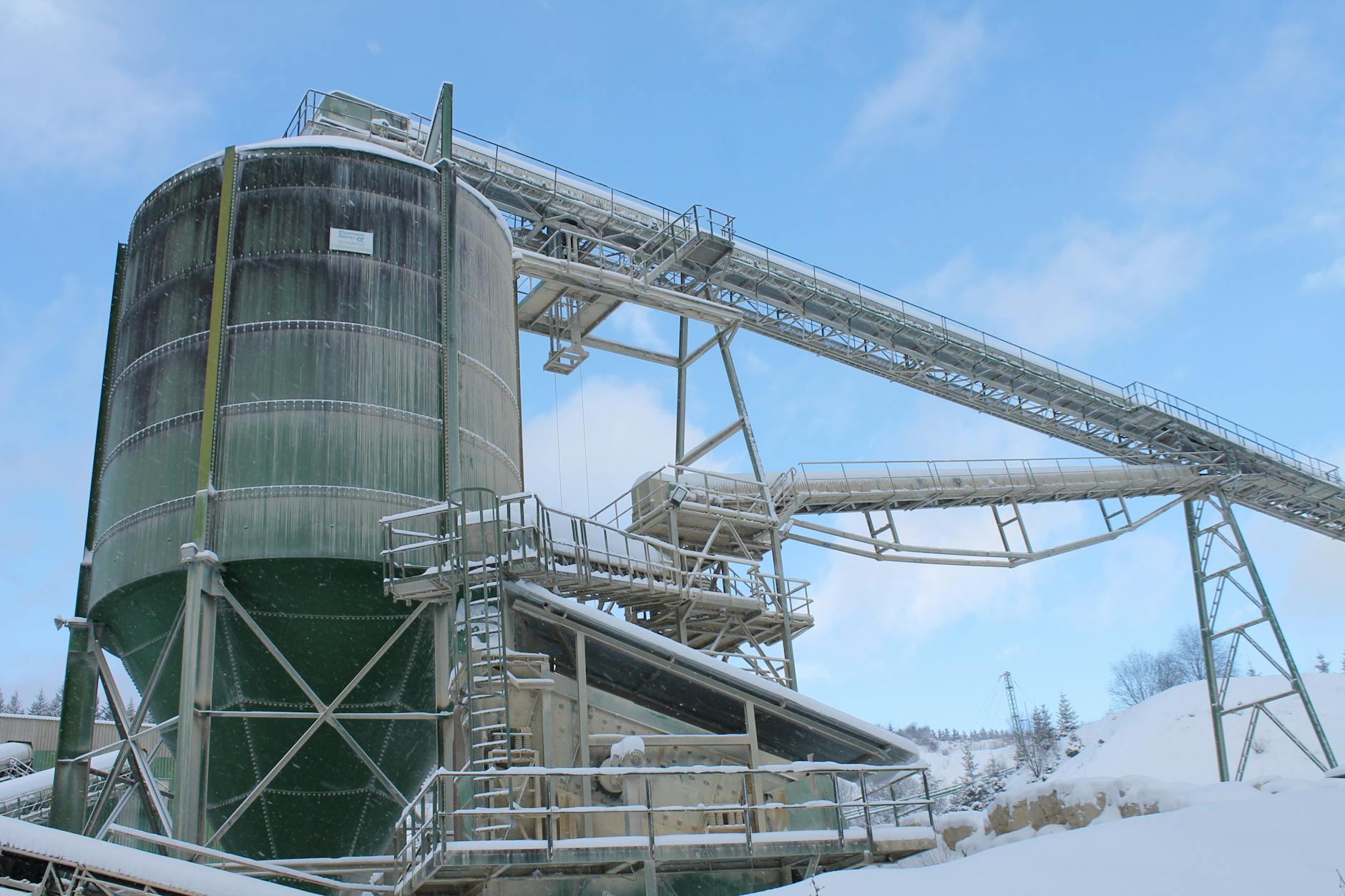
Photo by Jörn Sommer on Pexels | Source
The Broader Investment Landscape: What Inflation Means for AI Stocks
The hot wholesale price data reported this week deserves particular attention from anyone holding AI infrastructure positions. A 0.5% month-over-month increase in the Producer Price Index — well above economist expectations — suggests that inflationary pressures have not fully subsided despite the Federal Reserve's extended tightening cycle. For growth stocks with high capital requirements, sticky inflation is a dual threat: it raises the cost of doing business directly, and it keeps interest rates elevated, increasing the discount rate applied to future cash flows.
AI infrastructure companies are among the most capital-intensive businesses in public markets today. CoreWeave, for example, has taken on significant debt to finance its rapid GPU fleet expansion. Nebius and Iren are similarly in heavy investment phases. In a higher-for-longer rate environment, the cost of that debt matters enormously to long-term equity valuations.
What investors should monitor closely in the coming days:
- Any updated guidance or management commentary from CoreWeave following the Q4 release
- Nebius and Iren investor communications addressing the sector-wide selloff
- Federal Reserve commentary on the latest PPI data and its implications for rate policy
- Nvidia's order book signals as a leading indicator for GPU cloud demand
- OpenAI's recently disclosed $110 billion funding round, which includes investment from Amazon and Nvidia according to Reuters, as a data point for sustained AI compute demand
What Experts Are Saying
Analysts who cover the AI infrastructure space are divided on whether this week's CoreWeave-driven selloff represents a structural warning or a tactical overreaction. The bull case argues that demand for GPU compute is not going away — it is, if anything, accelerating as frontier AI model training and inference workloads continue to grow. The $110 billion capital raise by OpenAI reported by Reuters this week, drawing investment from Amazon, Nvidia, and SoftBank, is cited as evidence that the largest AI development organizations remain committed to extraordinary levels of compute spending.
The bear case, however, points to signs that the AI infrastructure buildout is entering a more competitive and margin-compressed phase. As more players enter the GPU cloud market and as hyperscale providers like Amazon Web Services, Microsoft Azure, and Google Cloud continue to expand their own internal AI compute capacity, the pricing power that companies like CoreWeave enjoyed in 2024 and early 2025 may be fading.
For retail investors, the key takeaway from this week's developments is straightforward: the AI infrastructure trade is maturing, and stock selection within the sector now matters more than it did when a rising tide was lifting all boats. CoreWeave's mixed Q4 is a reminder that execution risk is real, capital intensity is high, and macro conditions — including inflation — can shift the calculus quickly.
As always, investors are encouraged to consult qualified financial advisors before making decisions based on sector-level market movements.
Frequently Asked Questions
Why is CoreWeave (CRWV) stock falling after Q4 results?
CoreWeave reported mixed fourth-quarter results that showed strong revenue growth but raised concerns about high capital expenditure, margin pressure, and customer concentration risk. Investors reacted by selling shares, triggering a broader decline across AI infrastructure stocks.
Why are Nebius and Iren falling along with CoreWeave?
Nebius Group and Iren Limited are treated by markets as correlated plays in the AI infrastructure and GPU cloud sector. When CoreWeave disappoints, investors tend to reassess the entire category simultaneously, creating sympathy selloffs in peer companies regardless of their individual fundamentals.
How does the hot inflation data affect AI infrastructure stocks?
The January 2026 Producer Price Index came in at 0.5% month-over-month, well above expectations. For capital-intensive AI infrastructure companies that carry significant debt, higher inflation signals that interest rates may stay elevated longer, increasing borrowing costs and reducing the present value of future earnings.
Is CoreWeave a good investment after the Q4 selloff?
Analysts are divided, with bulls pointing to sustained AI compute demand evidenced by OpenAI's $110 billion funding round, while bears highlight rising competition and margin compression. Investors should conduct thorough due diligence and consult a financial advisor before making any decisions.
What did Bank of America say about Nvidia this week?
Bank of America reset its Nvidia price target following Nvidia's latest earnings report, according to TheStreet. The adjustment reflects uncertainty around the timing of hyperscale AI infrastructure spending, even as long-term demand for Nvidia's GPUs remains strong.


