

Will Iran Conflict Send Oil Above $100 a Barrel in 2026?
If you've been watching your gas prices creep up lately, you're not imagining it. The ongoing US-Israel military strikes on Iran have sent shockwaves through global energy markets — and traders, economists, and everyday consumers are all asking the same burning question: Will oil break the $100-per-barrel barrier for the first time since 2022?
The short answer? It's complicated. But the longer answer is far more interesting — and it affects your wallet directly. Let's break down exactly what's happening, what the experts are saying, and what you should realistically expect at the pump in the weeks ahead.

Photo by Tom Fournier on Pexels | Source
The Current State of Oil Markets
As of early March 2026, crude oil prices have been climbing steadily following the US-Israel joint strikes on Iranian military and nuclear infrastructure. Brent crude — the global benchmark — has been hovering in the high-$80s to low-$90s range, reflecting genuine market anxiety about supply disruption in one of the world's most energy-critical regions.
Here's why the numbers matter:
- Iran is a top-10 oil producer, pumping roughly 3 to 3.5 million barrels per day prior to the conflict escalation
- The Strait of Hormuz — the narrow waterway through which approximately 20% of all global oil passes — runs directly along Iran's southern coast
- OPEC+ producers, including Saudi Arabia and the UAE, have already announced plans to boost output in response to the disruption, according to reporting by Axios
The offsetting production increase from Gulf OPEC+ members has prevented the kind of immediate, dramatic price spike that many analysts feared in the first days of the conflict. However, it has not fully calmed the market, and safe-haven demand for gold and other assets signals that investors remain deeply nervous.
Why $100 Oil Is Possible — But Not Guaranteed
So what would it actually take to push Brent crude past the $100 threshold? Analysts point to a handful of specific scenarios:
Scenario 1: The Strait of Hormuz Gets Disrupted If Iran retaliates by mining the Strait, deploying naval assets to block tanker traffic, or launching attacks on Gulf shipping lanes, markets could react almost instantly. Even a partial closure of the Strait — which has never been fully blocked in modern history — could send prices soaring past $100 within days. The Strait is simply too critical to global supply chains to ignore.
Scenario 2: Saudi and UAE Infrastructure Gets Targeted Iran has proxy forces throughout the region, including Houthi fighters in Yemen who have already demonstrated the capability to strike Gulf oil infrastructure, as seen in the 2019 Abqaiq attacks on Saudi Aramco facilities. A repeat or escalation of such attacks would dramatically tighten global supply.
Scenario 3: Conflict Drags On Longer Than Expected President Trump has publicly suggested the Iran operation could be wrapped up in "four weeks or less." But military operations in the Middle East rarely follow neat timelines. A prolonged conflict introduces sustained uncertainty — exactly the kind of environment that pushes oil prices higher over time.
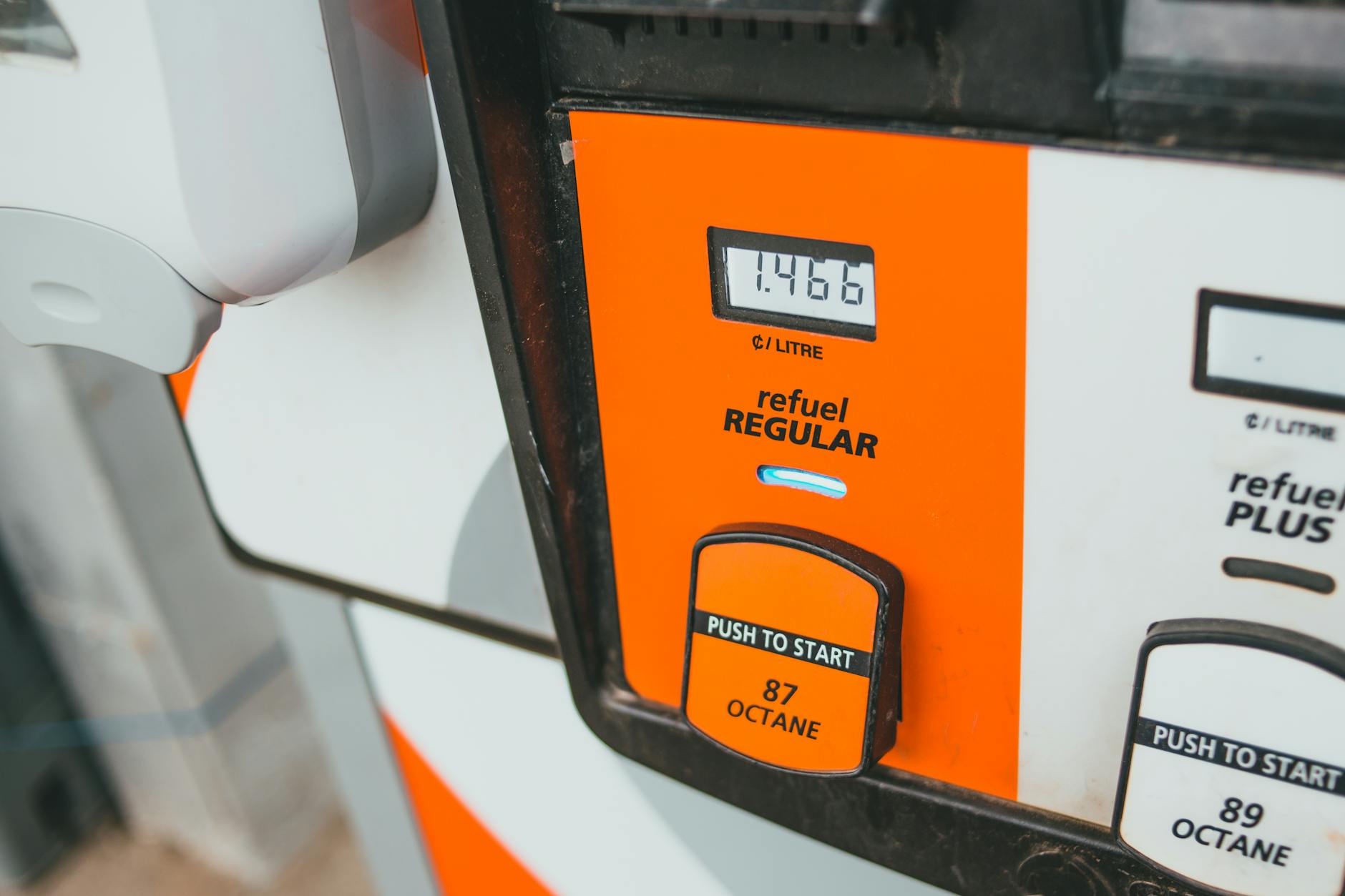
Photo by Erik Mclean on Pexels | Source
Why $100 Oil Might Not Happen
Here's the balancing force most people overlook: the global oil market has changed dramatically since the last time prices broke $100 in 2022.
- US shale production is near record highs, with American producers capable of rapidly scaling output to fill supply gaps
- Strategic Petroleum Reserves in the US, Europe, and Asia give governments a short-term buffer to deploy if prices spike sharply
- OPEC+ spare capacity — particularly in Saudi Arabia — remains substantial, estimated at over 3 million barrels per day, and producers have already signaled willingness to use it
- Demand concerns from a slowing global economy (particularly in China and Europe) continue to cap upside price pressure
DW.com's analysis notes that while the market has priced in a significant geopolitical risk premium, the structural supply cushion makes a sustained rally above $100 less likely than a short-term spike and retreat.
What This Means for Everyday Consumers
Let's bring this home — literally. What does all of this mean for you?
At the gas pump: If Brent crude stays in the $85-$95 range, expect US retail gasoline prices to remain elevated but not dramatically higher than current levels. A spike to $100+ would likely translate to a $0.30-$0.50 increase per gallon relatively quickly.
Heating and electricity costs: Natural gas prices often move in correlation with oil during geopolitical crises. If you heat your home with natural gas or live in a region with gas-heavy power generation, your utility bill could tick up in the coming months.
Inflation: Higher energy costs feed into everything from food transportation to manufacturing. The Federal Reserve, already watching inflation carefully, will be monitoring energy markets closely. Persistent oil above $100 would complicate any plans for interest rate cuts in 2026.
Airline tickets: Aviation fuel is a direct derivative of crude oil. If you're planning summer travel, booking sooner rather than later may be advisable if oil prices continue to climb.
What the Experts Are Actually Saying
Market analysts are divided — as they usually are. But here's where the range of expert opinion currently lands:
- Bulls on $100 oil point to the Hormuz risk as their core thesis, arguing that any meaningful disruption to Strait traffic would be enough to break the barrier
- Bears on the scenario argue that OPEC+ spare capacity, US shale flexibility, and diplomatic back-channels make a sustained rally above $100 unlikely within the current conflict parameters
- Bloomberg's markets reporting shows that bonds and the dollar have actually rallied during the conflict — a sign that institutional investors, while nervous, are not yet in full panic mode about energy supply collapse
The prediction markets have also been active. Following the confirmation of Iran's Supreme Leader Khamenei's death earlier in the conflict, platforms like Polymarket and Kalshi saw heavy trading volume around scenarios involving oil disruption — though those markets have faced scrutiny for potential insider trading concerns.

Photo by Ojas Narappanawar on Pexels | Source
The Bottom Line: How to Prepare
Whether oil hits $100 or not, the conflict has permanently shifted the near-term energy calculus for consumers and investors alike. Here's what you can do right now:
- Lock in travel plans early if you have summer trips planned — airfare is likely to trend higher
- Review your energy stocks exposure — oil majors like ExxonMobil, Chevron, and Shell have historically outperformed during Middle East supply crises
- Check your home energy rate — if your utility offers fixed-rate plans, locking in now could save money if prices spike further
- Watch the Strait of Hormuz news closely — any credible threat to shipping there is the single biggest oil price catalyst to monitor
- Don't panic-buy gasoline — strategic reserves exist precisely for demand spikes, and US supply chains remain resilient
The Iran conflict is far from over, and energy markets will remain volatile for the foreseeable future. The $100-barrel scenario is a real possibility under specific circumstances — but it is not yet the base case. Stay informed, stay flexible, and don't let headlines drive short-term financial decisions.
FAQ
What is the current oil price in 2026 after Iran strikes? As of early March 2026, Brent crude has been trading in the high-$80s to low-$90s range following US-Israel strikes on Iran. Markets have priced in a geopolitical risk premium, though OPEC+ output increases have helped limit more dramatic spikes.
Could Iran actually close the Strait of Hormuz? Iran has threatened to close the Strait of Hormuz in past crises, but has never fully done so. A complete closure would hurt Iran's own oil-exporting neighbors and invite massive international military response, making it a drastic last-resort option — but the risk is real and markets take it seriously.
How high could gas prices go if oil hits $100 a barrel? If Brent crude breaks $100, analysts estimate US retail gasoline prices could rise by $0.30 to $0.50 per gallon relatively quickly, depending on refinery capacity and regional supply conditions. The impact would vary by state and region.
Is now a good time to buy oil stocks given the Iran conflict? Oil majors have historically performed well during Middle East supply disruptions, but the timing of any rally is unpredictable. Investors should consider their overall portfolio risk tolerance and avoid making concentrated bets based solely on geopolitical developments.
What is OPEC+ doing about oil supply during the Iran conflict? According to Axios reporting, OPEC+ producers — particularly Saudi Arabia and the UAE — have already signaled plans to boost output to compensate for potential Iranian supply disruptions. This additional supply is one of the key factors preventing oil prices from spiking more dramatically above $100.
Frequently Asked Questions
What is the current oil price in 2026 after Iran strikes?
As of early March 2026, Brent crude has been trading in the high-$80s to low-$90s range following US-Israel strikes on Iran. Markets have priced in a geopolitical risk premium, though OPEC+ output increases have helped limit more dramatic spikes.
Could Iran actually close the Strait of Hormuz?
Iran has threatened to close the Strait of Hormuz in past crises but has never fully done so. A complete closure would hurt Iran's own oil-exporting neighbors and invite massive international military response, making it a drastic last-resort option — but the risk is real and markets take it seriously.
How high could gas prices go if oil hits $100 a barrel?
If Brent crude breaks $100, analysts estimate US retail gasoline prices could rise by $0.30 to $0.50 per gallon relatively quickly, depending on refinery capacity and regional supply conditions. The impact would vary by state and region.
Is now a good time to buy oil stocks given the Iran conflict?
Oil majors have historically performed well during Middle East supply disruptions, but the timing of any rally is unpredictable. Investors should consider their overall portfolio risk tolerance and avoid making concentrated bets based solely on geopolitical developments.
What is OPEC+ doing about oil supply during the Iran conflict?
According to Axios reporting, OPEC+ producers — particularly Saudi Arabia and the UAE — have already signaled plans to boost output to compensate for potential Iranian supply disruptions. This additional supply is one of the key factors preventing oil prices from spiking more dramatically above $100.


