

Trump's Vision: A 1990s Economic Revival for 2026
President Donald Trump has made no secret of his ambitions for the U.S. economy. According to a report published this week by the Associated Press, Trump is banking on two major forces — a pliant Federal Reserve that will cut interest rates and a wave of artificial intelligence investment — to recreate the kind of sustained economic expansion the United States experienced during the 1990s tech boom. That decade saw GDP growth averaging over 3% annually, unemployment fall to historic lows, and the stock market surge dramatically. But economists across the political spectrum are now raising serious doubts about whether that formula can work in 2026's far more complicated economic landscape.
The White House's optimism is not entirely without foundation. AI investment has surged across the U.S., with technology companies committing hundreds of billions of dollars to infrastructure buildout, data centers, and model development. Meanwhile, Trump has signaled his intent to nominate a Federal Reserve chair who would be more receptive to rate cuts — a sharp break from the institution's tradition of independence. The combination, Trump's team argues, mirrors the conditions that powered American prosperity in the Clinton era.
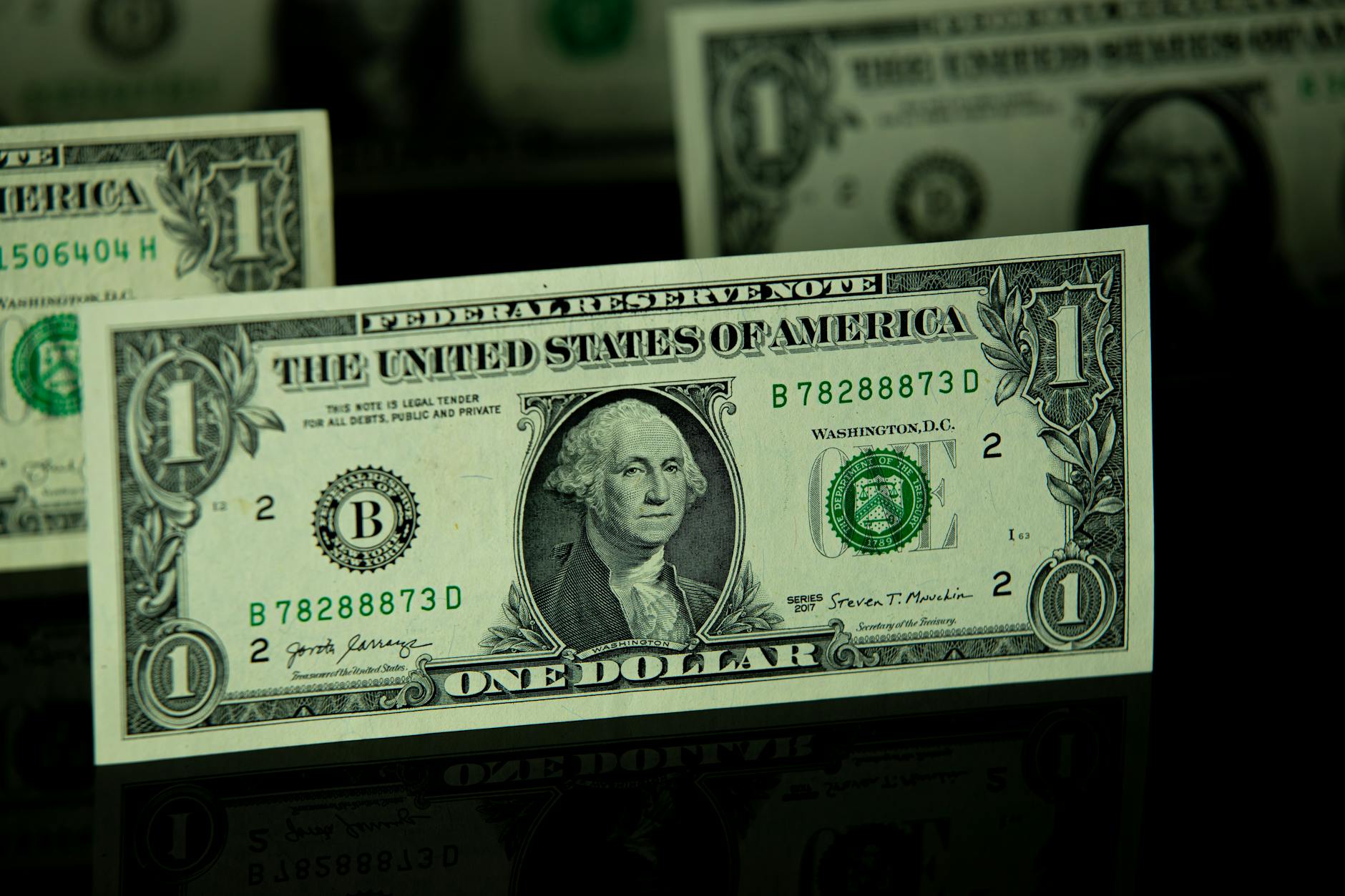
Photo by Sergei Starostin on Pexels | Source
What Economists Are Actually Saying
Despite the White House's confidence, the AP report reveals that leading economists are deeply skeptical. Several key objections have emerged from analysts and academic economists in recent days:
- Inflation remains a structural risk. Unlike the 1990s, today's economy is still navigating the after-effects of a sustained inflationary period. Cutting interest rates too aggressively, economists warn, could reignite price pressures that the Fed spent years trying to tame.
- AI productivity gains are not yet materializing broadly. While AI investment is booming, economists note that translating capital expenditure into measurable GDP-wide productivity growth typically takes years, if not decades. The 1990s internet boom, for example, did not fully show up in productivity statistics until the late part of the decade.
- Geopolitical headwinds are mounting. This week's escalation in the Middle East, following U.S. and Israeli strikes on Iran and Iran's subsequent retaliatory strikes on Gulf states including Dubai, Abu Dhabi, Qatar, and Bahrain, according to the New York Times, has injected fresh uncertainty into global energy markets and supply chains — risks that have no direct parallel in the comparatively stable 1990s international environment.
- Tariff policy conflicts with growth goals. Several economists cited in the AP report pointed out that Trump's broad tariff regime, which has been expanded throughout 2026, works in direct opposition to the low-cost import environment that helped keep inflation in check during the 1990s boom.
"The conditions that produced the 1990s expansion were highly specific and largely unrepeatable," one economist told the AP. "You had the peace dividend from the Cold War's end, globalization in its early and most beneficial phase, and a technology revolution that had been building for decades. Replicating that is not a matter of policy choice."

Photo by Déji Fadahunsi on Pexels | Source
The Federal Reserve Factor
Central to Trump's economic strategy is the Federal Reserve. The president has long been vocal about his desire for lower interest rates, and his upcoming Fed chair pick — expected to be announced in the coming months ahead of Jerome Powell's term expiring in May 2026 — is widely anticipated to be someone more aligned with the administration's growth agenda, according to multiple reports.
However, this approach carries significant risks that economists are publicly flagging. Fed independence has historically been a cornerstone of U.S. economic credibility. Markets and foreign investors have long priced U.S. assets with the assumption that monetary policy is insulated from political pressure. Any erosion of that perception, analysts say, could trigger bond market instability, dollar weakness, or capital flight — effects that would undermine the very growth Trump is seeking.
This week, Bloomberg reported that the dollar and bonds briefly rallied as traders processed the impact of the Iran conflict, suggesting markets are currently treating the U.S. as a relative safe haven. But economists warn that a politically driven rate-cut cycle could reverse that dynamic.
It is also worth noting that the AI sector itself, which Trump is counting on as a growth engine, is facing its own headwinds. A veteran analyst at TheStreet sent what the publication described this week as a "shocking message" about Nvidia following its latest earnings report, suggesting that the AI infrastructure buildout may be reaching a point of overcapacity concern in certain segments of the market.
AI as a Growth Engine: Promise vs. Reality
The White House's AI optimism is partially grounded in real data. According to recent reports, U.S. technology companies have committed to spending hundreds of billions on AI infrastructure in 2025 and 2026. NVIDIA this week announced, via its official newsroom, a major commitment alongside global telecom leaders to build next-generation 6G networks on open, AI-native platforms — a signal of how deeply AI is being woven into long-term infrastructure investment.
But economists draw a careful distinction between investment activity and economic productivity. In the 1990s, the internet boom initially showed up primarily as investment and stock market gains before eventually driving genuine productivity improvements. Today's AI investment cycle, experts argue, is still in the early stages where capital is being deployed but widespread productivity benefits remain largely theoretical for most sectors of the economy.
"We are in the investment phase, not the productivity phase," one technology economist noted in commentary published this week. "Whether AI delivers the kind of broad-based productivity gains that could drive a decade-long expansion is genuinely unknown."

Photo by Mikhail Nilov on Pexels | Source
What This Means for Everyday Americans
For ordinary Americans, the stakes of this debate are significant. If Trump's bet pays off — if a more accommodative Fed keeps borrowing costs manageable and AI drives genuine productivity growth — the result could be lower unemployment, higher wages, and sustained stock market growth. But if economists' concerns prove correct, the risks include:
- A return of inflation if rate cuts are premature
- Market instability if Fed independence is perceived to be compromised
- Higher consumer prices from ongoing tariff impacts that offset any AI productivity gains
- Energy cost spikes driven by Middle East instability affecting oil supply chains
According to Reuters and Ipsos polling published this week, just one in four Americans supports the current U.S. military strikes on Iran — a foreign policy reality that adds political complexity to Trump's domestic economic agenda. Managing a war and a major economic restructuring simultaneously is a challenge that will test the administration's capacity on multiple fronts.
For now, markets are watching closely. As Bloomberg reported this week, bonds and the dollar showed initial resilience in the face of Iran-related volatility. But the longer-term picture — and whether Trump's '90s boom analogy becomes a realized policy success or a cautionary tale — remains, according to economists, very much an open question.
Key Takeaways
- Trump is publicly betting on a Fed rate cut cycle and AI investment to recreate 1990s-style economic growth, per the AP
- Leading economists cited this week raise concerns about inflation risk, AI productivity timelines, and tariff contradictions
- Trump's expected Fed chair pick is anticipated to favor lower rates, raising questions about central bank independence
- Geopolitical risk from the Iran conflict adds significant uncertainty not present in the 1990s economic environment
- AI investment is booming but has not yet translated into broad GDP productivity gains, economists note
Frequently Asked Questions
Why is Trump comparing his economic plan to the 1990s boom?
Trump is arguing that a combination of Federal Reserve interest rate cuts and an AI-driven productivity surge can replicate the sustained GDP growth, low unemployment, and stock market gains seen in the 1990s. According to the AP, his administration views these two factors as the core engines of a new expansion cycle.
What do economists think about Trump's Federal Reserve strategy in 2026?
Most economists cited in recent reports are skeptical, warning that political pressure on the Fed to cut rates risks reigniting inflation and undermining the central bank's credibility. They argue that Fed independence is a key pillar of U.S. financial stability and investor confidence.
Can AI really drive the kind of economic boom Trump is predicting?
Economists generally acknowledge AI's long-term potential but caution that the current cycle is still in the investment phase, not the productivity phase. Broad GDP-wide gains from AI are expected to take years to materialize, similar to how internet productivity gains took nearly a decade to show up in the 1990s data.
How does the Iran conflict affect Trump's economic growth plans?
The ongoing Iran conflict, including Iran's retaliatory strikes on Gulf states this week according to the New York Times, adds geopolitical risk that drives up energy prices and supply chain uncertainty. This is a major difference from the 1990s, when the U.S. benefited from a relatively stable post-Cold War international environment.
What happens if Trump's Fed pick cuts rates too aggressively?
Economists warn that premature or politically motivated rate cuts could reignite inflation, weaken the dollar, and spook bond markets. These outcomes would directly contradict the growth goals the administration is pursuing and could destabilize the broader U.S. financial system.


