

AMD Is Back in the Spotlight — But Is It a Buy?
After months of trading in the shadow of Nvidia's relentless dominance, Advanced Micro Devices (AMD) is suddenly the name on every investor's lips. A high-profile deal with Meta — one of the biggest AI infrastructure spenders on the planet — has reignited debate about whether AMD is finally ready to close the gap with its arch-rival and deliver serious returns for shareholders.
But before you rush to hit the "buy" button, there's a lot to unpack. This isn't a simple story. AMD's relationship with AI is complicated, its competitive position is shifting, and the broader macro environment — rattled by U.S.-Iran tensions, sticky inflation, and volatile oil markets — makes timing any tech investment tricky right now. Let's break it all down.

Photo by Markus Winkler on Pexels | Source
What Exactly Is the Meta-AMD Deal?
Meta has been aggressively diversifying its AI chip supply chain, reducing its dependence on Nvidia's H100 and B200 GPUs. As part of that strategy, Meta has been working with AMD to deploy its Instinct MI300X and MI325X accelerators at scale across its data centers.
The partnership isn't just a token order. Meta is one of the largest AI compute consumers in the world, investing tens of billions of dollars in infrastructure annually. When a company of that scale commits meaningfully to AMD silicon, it sends a clear signal to the rest of the market: AMD's AI hardware is production-ready and enterprise-grade.
For AMD, landing Meta as a serious AI customer matters enormously for a few key reasons:
- Revenue diversification: AMD's data center segment has been growing rapidly, but it needs big anchor customers to sustain that momentum.
- Credibility signal: Other hyperscalers and enterprises are watching. If Meta can run workloads at scale on AMD, so can everyone else.
- Software ecosystem progress: One of AMD's biggest historical weaknesses has been ROCm, its software stack for AI. Meta's engineering team working at scale with AMD chips helps improve that ecosystem.
AMD's Financial Picture Heading Into 2026
Let's be honest about where AMD stands financially. The company delivered strong data center revenue growth through 2024 and into 2025, driven by its MI300X GPU — but it has consistently fallen short of the sky-high expectations that came with the AI boom hype cycle.
Here's what we know about AMD's position right now:
- Data Center GPU revenue has been growing but remains a fraction of Nvidia's. Nvidia continues to control an estimated 80%+ of the AI accelerator market.
- Client and gaming segments remain under pressure as PC demand normalizes post-pandemic.
- Margins have improved as AMD shifts its revenue mix toward higher-value data center products.
- Guidance has been mixed — AMD has a history of issuing conservative guidance that it often beats, but investor patience has worn thin after several quarters of underwhelming AI GPU revenue relative to competitor benchmarks.
The Meta deal doesn't immediately transform AMD's income statement. But it does validate the roadmap — and Wall Street is increasingly forward-looking when it comes to AI infrastructure bets.

Photo by Jakub Zerdzicki on Pexels | Source
The Bull Case: Why AMD Could Be a Smart Buy
If you're considering AMD as an investment, here are the strongest arguments in favor:
1. Nvidia Supply Constraints Create AMD Opportunity Nvidia's GPUs remain backordered. Enterprise customers who can't get Nvidia hardware on their preferred timeline are increasingly turning to AMD as a credible alternative. This supply dynamic isn't going away overnight.
2. The MI350 and MI400 Roadmap Looks Strong AMD's next-generation Instinct GPUs are expected to close the performance gap with Nvidia's Blackwell architecture. If AMD can deliver competitive silicon on schedule, its market share in AI training and inference workloads could expand meaningfully.
3. AMD Trades at a Discount to Nvidia On a price-to-earnings basis, AMD is significantly cheaper than Nvidia. If you believe AI infrastructure spending will remain elevated through the decade — and all signs point to yes — AMD at current valuations offers a more attractive risk-reward profile than chasing Nvidia at elevated multiples.
4. x86 CPU Dominance Continues AMD's EPYC server CPUs remain highly competitive against Intel's Xeon lineup. Data center CPU revenue provides a stable, growing base even as GPU revenue fluctuates.
5. Diversified Customer Base Growing Beyond Meta, AMD has been expanding relationships with Microsoft Azure, Google Cloud, and Oracle Cloud. Each new hyperscaler deployment strengthens AMD's position.
The Bear Case: Real Risks You Shouldn't Ignore
Balanced investing means taking the other side seriously too. Here's what could go wrong:
- Nvidia's moat is real and deep: CUDA, Nvidia's software ecosystem, has a decade-plus head start on ROCm. Switching costs are high, and most AI researchers still default to Nvidia.
- Execution risk on new GPUs: AMD has stumbled before on product launches. Any delay to the MI350 or MI400 would be punished harshly by markets.
- Macro headwinds are real: With U.S.-Iran tensions escalating, oil prices volatile, and U.S. wholesale inflation running hotter than expected at 2.9% year-over-year as of early 2026, the broader risk environment isn't friendly to high-multiple tech stocks.
- Competition from custom silicon: Meta, Google, Microsoft, and Amazon are all investing heavily in custom AI chips. As in-house silicon matures, it could reduce reliance on both Nvidia and AMD.
- China export restrictions: AMD, like Nvidia, faces ongoing U.S. government restrictions on selling advanced AI chips to China. This limits a significant addressable market.
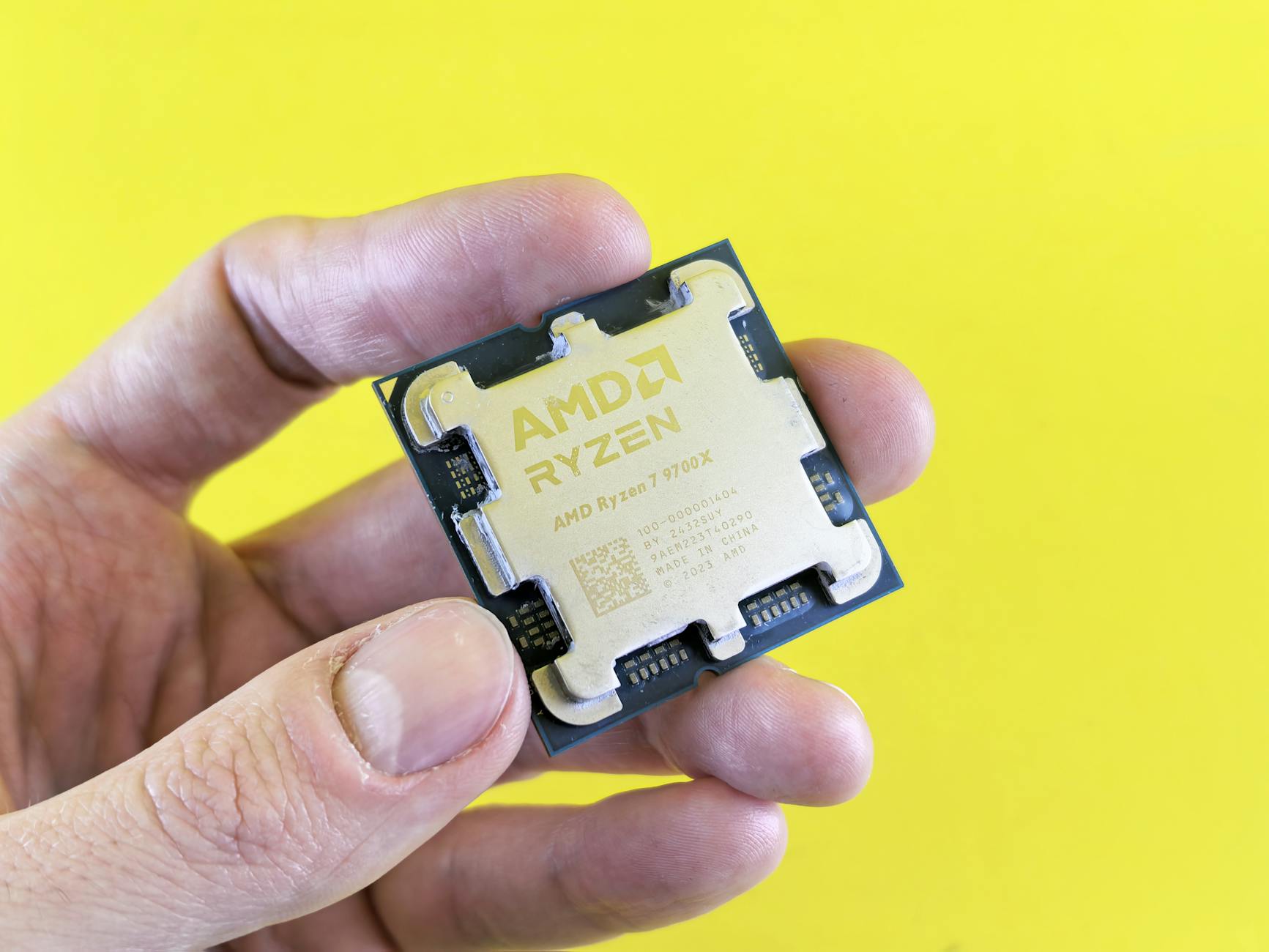
Photo by Andrey Matveev on Pexels | Source
What Analysts Are Saying
Opinions on AMD are genuinely divided heading into 2026. Some analysts at major institutions have reiterated buy ratings on the strength of the Meta relationship and the MI300X adoption curve, pointing to AMD's data center revenue trajectory as evidence that the AI GPU story is still in its early innings.
Others are more cautious, noting that AMD's AI GPU revenue — while growing — has consistently underwhelmed relative to pre-cycle analyst estimates, and that the market may be pricing in a more optimistic scenario than fundamentals currently support.
The consensus view seems to be: AMD is a hold with upside potential, not a screaming buy at any price. Valuation matters, and entry point matters even more in a volatile macro environment.
So Should You Buy AMD?
Here's the honest answer: it depends on your time horizon and risk tolerance.
If you're a long-term investor (3–5+ years) who believes AI infrastructure spending will compound at high rates through the decade, AMD at current levels offers a credible way to gain diversified AI exposure at a discount to Nvidia. The Meta deal is a genuine positive data point, not just noise.
If you're a short-term trader looking for a catalyst-driven pop, be careful. AMD's stock has historically been volatile around earnings, and the broader market is jittery. Any miss on guidance or delay in the MI350 rollout could result in a sharp pullback.
The smartest approach? Dollar-cost average into a position rather than going all-in at once. Build your conviction over time as AMD continues to execute — or doesn't — on its AI roadmap.
AMD isn't Nvidia. But it doesn't need to be. It just needs to keep winning market share at the margins, and with Meta now publicly committed to its silicon, the trajectory is pointing in the right direction.
FAQ
What is the AMD Meta deal about? Meta has been deploying AMD's Instinct MI300X and MI325X AI accelerators in its data centers as part of a strategy to diversify away from Nvidia. The partnership validates AMD's AI hardware at enterprise scale and is a significant positive signal for AMD's data center business.
Is AMD a good buy compared to Nvidia in 2026? AMD trades at a lower valuation than Nvidia and offers exposure to the AI infrastructure theme at a relative discount. However, Nvidia still dominates the AI accelerator market with a much larger software ecosystem. AMD is generally considered a higher-risk, potentially higher-reward alternative to Nvidia.
What are the biggest risks of investing in AMD right now? The main risks include Nvidia's entrenched software advantage, AMD's history of underwhelming AI GPU revenue relative to expectations, execution risk on upcoming GPU launches, geopolitical disruptions affecting tech markets, and U.S. export restrictions limiting AMD's China business.
How does AMD's MI300X compare to Nvidia's H100 and B200? The MI300X is competitive with Nvidia's H100, particularly in inference workloads, and AMD has claimed memory bandwidth advantages. However, Nvidia's Blackwell B200 represents the current performance frontier, and AMD's next-generation chips are still rolling out. The software ecosystem gap remains AMD's biggest challenge.
What is AMD's data center revenue outlook for 2026? AMD has been guiding for continued data center revenue growth, driven by MI300X and MI325X deployments. However, exact forward guidance figures are subject to change with each earnings release, and investors should monitor AMD's quarterly results and guidance updates closely.
Frequently Asked Questions
What is the AMD Meta deal about?
Meta has been deploying AMD's Instinct MI300X and MI325X AI accelerators in its data centers as part of a strategy to diversify away from Nvidia. The partnership validates AMD's AI hardware at enterprise scale and is a significant positive signal for AMD's data center business.
Is AMD a good buy compared to Nvidia in 2026?
AMD trades at a lower valuation than Nvidia and offers exposure to the AI infrastructure theme at a relative discount. However, Nvidia still dominates the AI accelerator market with a much larger software ecosystem, making AMD a higher-risk, potentially higher-reward alternative.
What are the biggest risks of investing in AMD right now?
The main risks include Nvidia's entrenched software advantage, AMD's history of underwhelming AI GPU revenue relative to expectations, execution risk on upcoming GPU launches, and U.S. export restrictions limiting AMD's China business.
How does AMD's MI300X compare to Nvidia's H100 and B200?
The MI300X is competitive with Nvidia's H100, particularly in inference workloads, and AMD has claimed memory bandwidth advantages. However, Nvidia's Blackwell B200 represents the current performance frontier, and AMD's software ecosystem gap remains its biggest challenge.
What is AMD's data center revenue outlook for 2026?
AMD has been guiding for continued data center revenue growth driven by MI300X and MI325X deployments. Investors should monitor AMD's quarterly results closely, as guidance has historically been volatile relative to analyst expectations.


