

Hundreds of Thousands Stranded as Iran Strike Chaos Spreads Across Global Air Travel
Hundreds of thousands of travelers found themselves stranded at airports across the Middle East, Europe, and Asia in the days following the U.S.-Israel military strikes on Iran, according to reports from PBS and multiple aviation tracking outlets. Flight cancellations, emergency airspace closures, and cascading reroutes have created one of the most significant global aviation disruptions since the COVID-19 pandemic era, with no clear end in sight as of March 2, 2026.
The scale of the disruption is staggering. Airlines from more than a dozen countries have suspended or severely curtailed service to and through the region, leaving passengers stranded not just in Gulf hub airports like Dubai International (DXB) and Hamad International in Doha, but also in connecting airports across South Asia, East Africa, and Southern Europe. Travelers who had booked connecting flights through these major hubs are now facing waits measured not in hours but in days.
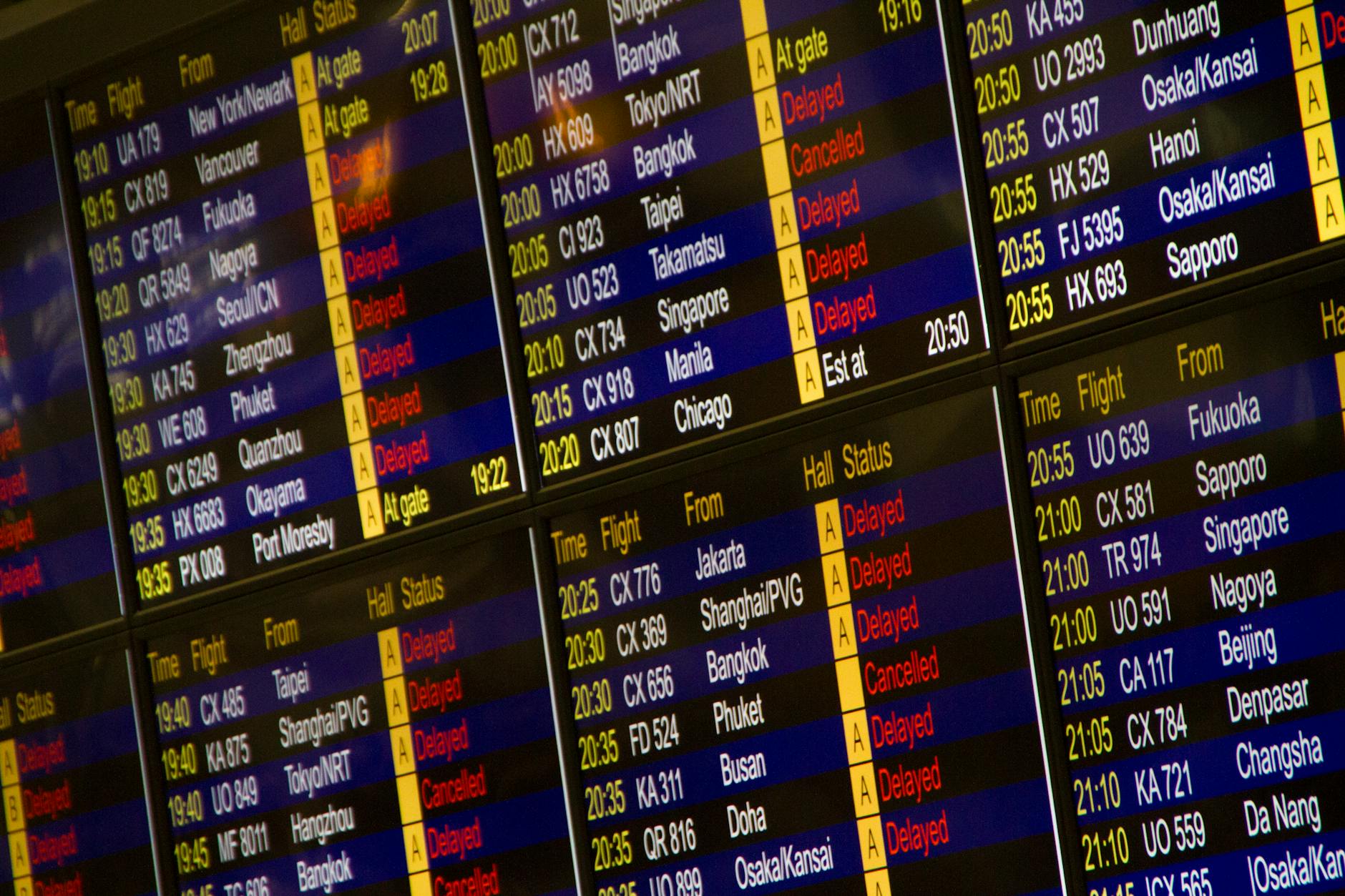
Photo by Oscar Chan on Pexels | Source
Which Airspace Has Been Closed — and Why It Matters
The core of the disruption stems from the closure of Iranian airspace, which handles an estimated 1,000 to 1,500 commercial flights per day in normal conditions. Iran sits at a critical junction between Europe and South Asia, and its airspace is a primary corridor for routes connecting London, Paris, Frankfurt, and Amsterdam with Mumbai, Delhi, Bangkok, and beyond.
With Iranian airspace now fully closed to commercial aviation following the strikes, airlines are being forced into significantly longer reroutes. According to aviation analysts cited in PBS reporting, flights that would normally traverse Iranian airspace in under an hour are now adding two to four hours to journey times by detouring south over the Arabian Sea or north through Central Asian corridors — routes that also carry their own geopolitical complications given ongoing tensions in the broader region.
Key airports reporting severe congestion and stranding incidents include:
- Dubai International Airport (UAE): Despite the UAE not being a direct party to the conflict, its airspace management has come under strain as dozens of airlines reroute through or around the Gulf
- Istanbul Atatürk and Istanbul Airport (Turkey): Seeing significant overflow as European carriers look for alternative transit hubs
- Colombo Bandaranaike International (Sri Lanka): Emerging as an unexpected waypoint for South Asia-bound flights avoiding the Persian Gulf corridor
- New Delhi Indira Gandhi International: Reporting flight delays of up to six hours on European-bound routes

Photo by RDNE Stock project on Pexels | Source
Airlines Struggling to Respond at Scale
The operational challenge for airlines is not merely logistical — it is financial and diplomatic. Several major carriers, including Lufthansa, Air France-KLM, British Airways, and a number of Asian carriers, had already suspended Iran overflight routes in the immediate aftermath of the strikes, according to reports. But the broader ripple effects — congested alternate routes, fuel stops at unplanned airports, crew rest regulation violations triggered by extended flight times — are compounding the crisis hour by hour.
According to reporting from PBS, airline customer service lines have been overwhelmed since the first wave of cancellations hit over the weekend. Many travelers stranded in Gulf airports have described sleeping on airport floors, receiving inadequate food vouchers, and struggling to get clear information from airline staff who themselves are receiving conflicting operational directives from their home carriers.
Particularly affected groups include:
- Business travelers who booked flexible but now fully disrupted itineraries through Gulf hubs
- South Asian migrant workers returning from jobs in Gulf states, many of whom have limited financial resources to absorb hotel and rebooking costs
- Students traveling between Europe and Asia for the academic spring term
- Medical tourists who had scheduled procedures in countries now cut off by closed airspace
Several travel insurance analysts have noted that standard travel insurance policies may not cover disruptions caused by acts of war or military conflict, leaving many travelers without the financial safety net they assumed they had.
Canada and India Diplomatic Channel Offers Contrast
Against this backdrop of regional chaos, one notable diplomatic development emerged this week. Canadian Prime Minister Mark Carney traveled to New Delhi for a meeting with Indian Prime Minister Narendra Modi — described by the BBC as a historic trip aimed at resetting bilateral ties that had grown strained in recent years over the Khalistan issue. The timing of Carney's India visit, at a moment when Middle East aviation corridors are shut down, underscored just how significantly the Iran strikes are reshaping even routine international diplomacy and travel logistics.
Canada, like several other nations, has issued updated travel advisories urging citizens to avoid non-essential travel to the broader Middle East and Gulf region, and is working through consular channels to assist stranded Canadians, according to reports.

Photo by Gustavo Fring on Pexels | Source
The Economic Toll Is Already Being Counted
The financial cost of the aviation disruption is mounting rapidly. Industry analysts estimate that each day of widespread Middle East airspace closure costs the global aviation sector hundreds of millions of dollars in additional fuel costs, crew expenses, rebooking fees, and lost revenue. For Gulf hub airlines like Emirates, Etihad, and Qatar Airways — which have built their entire business models around being the world's transfer point between East and West — the disruption is particularly acute.
Emiratesand Etihad have not officially commented on the full financial impact as of this writing, but aviation finance analysts quoted in regional reporting suggest that a two-week airspace closure scenario could cost Gulf carriers alone upward of $2 billion in combined losses. Shares in several airline groups fell sharply when markets opened after the weekend strikes, according to Bloomberg's Markets Wrap reporting from this week.
For travelers, the immediate practical guidance from travel experts and consular officials is clear:
- Do not travel to the region unless absolutely necessary
- Check your airline's specific rebooking and waiver policies — many carriers have issued travel waivers that allow free rebooking or full refunds for affected routes
- Contact your travel insurance provider immediately and specifically ask about war/conflict exclusion clauses
- Monitor your government's travel advisory page for the most current airspace and safety information
- Be prepared for extended delays even on routes that appear unaffected — the ripple effects of rerouting are causing congestion at airports far from the conflict zone
What Happens Next for Global Aviation
Aviation safety bodies including ICAO (International Civil Aviation Organization) have not yet issued a comprehensive timeline for when Iranian airspace might reopen to commercial traffic. Historical precedents — including the closure of Ukrainian airspace following Russia's 2022 invasion — suggest that airspace closures tied to active military conflicts can persist for months or even years, fundamentally reshaping global aviation route maps.
If Iranian airspace remains closed for an extended period, airline economists warn of a structural shift in the economics of long-haul aviation between Europe and Asia, with ticket prices on affected routes potentially rising by 15 to 25 percent as airlines absorb higher fuel costs from longer routings. Budget carriers with thinner margins may be forced to suspend affected routes entirely.
For now, hundreds of thousands of travelers remain stranded, waiting for a conflict thousands of miles away from their final destinations to resolve — or at least stabilize — enough to let the world's airports breathe again.
Frequently Asked Questions
Why are travelers stranded after the US-Israel strikes on Iran?
The US-Israel military strikes on Iran triggered the immediate closure of Iranian airspace, which handles over 1,000 commercial flights per day. Airlines have been forced into lengthy reroutes or cancellations, causing a massive cascading disruption at airports across the Middle East, Europe, and South Asia.
Which airports are most affected by the Iran airspace closure?
Dubai International, Istanbul Airport, New Delhi's Indira Gandhi International, and several South Asian hub airports are reporting the worst congestion and delays. Gulf hub airports are particularly strained as dozens of airlines reroute around closed Iranian airspace.
Does travel insurance cover being stranded due to the Iran strikes?
Many standard travel insurance policies include exclusions for disruptions caused by acts of war or military conflict, which could leave affected travelers without coverage. Experts urge travelers to contact their insurer directly and ask specifically about war exclusion clauses in their policy.
How long could Iranian airspace remain closed to commercial flights?
There is currently no official timeline from aviation bodies like ICAO. Historical precedent, such as Ukraine's airspace closure after Russia's 2022 invasion, suggests closures tied to active military conflict can last months or longer, potentially reshaping global aviation routes permanently.
What should I do if I am stranded at an airport due to the Iran conflict?
Check your airline's specific travel waiver policy, as many carriers are offering free rebooking or refunds for affected routes. Contact your travel insurer, monitor your government's official travel advisory, and be prepared for multi-day delays even on routes that appear unaffected by the conflict.


