

Iran's Nuclear Ambitions Are Back in the Headlines — And It's Serious
If you've been following the Iran situation with growing unease, you're not alone. A stunning new report from U.S. officials suggests that Iran could retrieve significant quantities of uranium from a site that was bombed by the United States just last year. That's not a small footnote in the news cycle — that's a potential game-changer for global security, Middle East diplomacy, and the already fragile balance of power in the region.
At the same time, Iran is reportedly nearing a decision on a new supreme leader following the death of Ali Khamenei, which The Guardian called "the end of an era" — and potentially Iran's own Berlin Wall moment. So what does all of this mean? Let's break it down clearly and honestly.

Photo by Tawseef Ahmad on Pexels | Source
What the Intelligence Reports Actually Say
According to reporting from The New York Times, U.S. officials have assessed that Iran retains the ability to recover enriched uranium material from at least one site that was targeted in last year's military strikes. This is significant for several reasons:
- The strikes may not have been as decisive as initially claimed. Military strikes on nuclear infrastructure are extraordinarily complex operations. Even heavily damaged facilities can retain material that is recoverable with the right engineering effort.
- Iran's nuclear knowledge isn't stored in buildings. Scientists, centrifuge designs, and enrichment techniques live in the minds of thousands of personnel — none of which can be bombed away.
- The timeline to a functional weapon may be shorter than public statements suggest. Several independent nuclear analysts have noted that Iran's breakout time — the period needed to assemble enough fissile material for one weapon — could be measured in weeks rather than months if it prioritizes the effort.
None of this means a nuclear weapon is imminent. But it does mean the situation is considerably more complicated than a simple military victory narrative would suggest.
The Leadership Vacuum: What Khamenei's Death Changes
The death of Supreme Leader Ali Khamenei has created a profound power vacuum inside Iran. This is no ordinary political transition. Khamenei ruled Iran for over three decades, shaping everything from military doctrine to cultural policy. Choosing his successor involves Iran's Assembly of Experts — an 88-member clerical body — and the deliberations are reportedly intense and fractious.
Why does this matter for the nuclear question? Because the new supreme leader's ideological orientation will almost entirely determine whether Iran is willing to negotiate or double down on confrontation. Possible successors range from figures who favor cautious pragmatism to hardliners who view nuclear capability as a non-negotiable matter of national sovereignty and survival.
The next few weeks in Tehran may be the most consequential since the 1979 revolution.

Photo by Jeff Lanuza on Pexels | Source
Is a Nuclear Deal Even on the Table?
Here's where things get genuinely complicated. The Trump administration has publicly taken a maximalist position — demanding not just nuclear limitations but a complete dismantlement of Iran's enrichment infrastructure. Iran, for its part, has historically refused to accept zero-enrichment frameworks, viewing domestic nuclear capability as a point of national pride and a security guarantee.
So is a deal possible? Let's look at the honest landscape:
Arguments That a Deal Could Happen
- Economic pressure is immense. Iran's economy has been battered by sanctions, war disruption, and the collapse of oil export revenues. A new, more pragmatic supreme leader might calculate that economic survival requires compromise.
- Regional exhaustion is real. The broader Middle East conflict has extracted enormous human and economic costs from all parties. There's a version of events in which all sides see a negotiated off-ramp as preferable to continued escalation.
- The diplomatic back-channel remains open. Despite public maximalism, intelligence officials from multiple countries confirm that quiet diplomacy is ongoing through third-party intermediaries including Oman and Qatar.
Arguments Against a Near-Term Deal
- Trust is at historic lows. The U.S. withdrawal from the 2015 Joint Comprehensive Plan of Action (JCPOA) under Trump's first term permanently damaged Iranian confidence in Washington's commitment to multilateral agreements.
- Iran's internal politics favor hardliners. During a leadership transition, appearing to capitulate to American military pressure would be politically toxic for any Iranian faction seeking to consolidate power.
- The uranium recovery issue changes the calculus. If Iran can reconstitute its nuclear program faster than anticipated, it has less incentive to negotiate from a position of weakness.
The Desalination Attacks: A New and Worrying Front
One development that hasn't received enough attention in Western media: The New York Times reported that vital water desalination plants in both Iran and Bahrain have been attacked. This is extraordinarily alarming.
Desalination infrastructure is civilian in nature and essential to survival in the Gulf region, where freshwater sources are almost nonexistent. Attacks on water infrastructure:
- Constitute a violation of international humanitarian law under most legal interpretations
- Threaten civilian populations directly, creating humanitarian crises that can destabilize governments
- Signal an escalatory spiral in which both sides are willing to target critical civilian infrastructure
For everyday people in the Gulf region, this isn't abstract geopolitics — it's a direct threat to drinking water. The ripple effects on regional stability, refugee flows, and international condemnation could be significant.
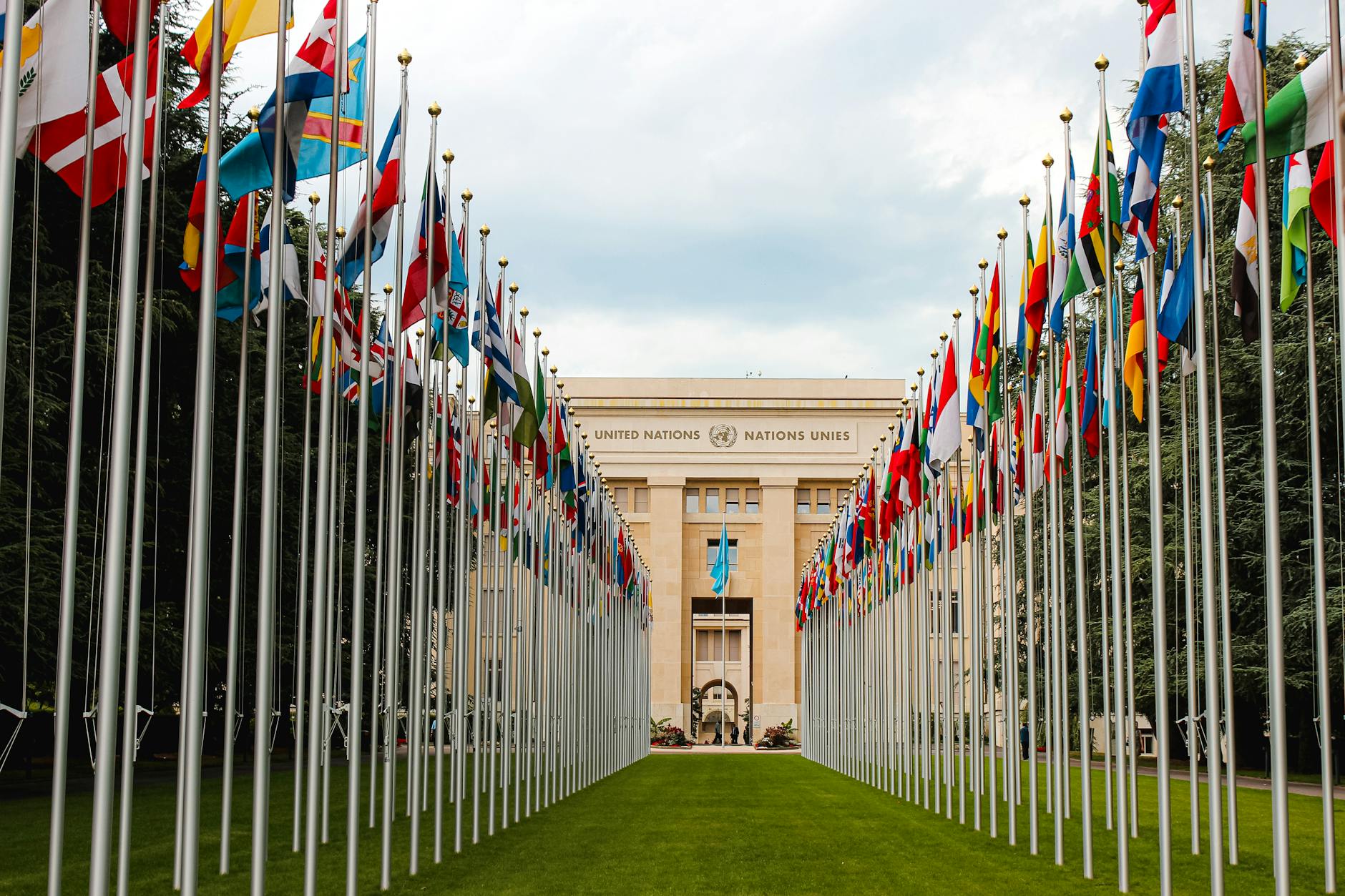
Photo by Mathias Reding on Pexels | Source
What This Means for the Rest of the World
Let's be direct about the global stakes here, because they are genuinely high:
Oil markets remain deeply sensitive to every development. The Strait of Hormuz — through which roughly 20% of globally traded oil passes — remains a flashpoint. Any further escalation that threatens shipping through the strait would send energy prices sharply higher worldwide.
European security is affected too. The explosion at the U.S. Embassy entrance in Oslo is a reminder that conflict rarely stays neatly contained within geographic borders. Security services across Europe and North America have elevated their threat assessments.
Nuclear proliferation is the big-picture concern that keeps arms control experts up at night. If Iran successfully reconstitutes a nuclear capability despite military strikes, it sends a clear message to other countries considering similar programs: that pursuing nuclear deterrence works.
What Should You Be Watching For?
If you want to track how this situation evolves, here are the key indicators to follow:
- Who Iran's Assembly of Experts selects as the new supreme leader — this is the single biggest variable in the near-term trajectory
- IAEA inspection reports — the International Atomic Energy Agency's access to Iranian sites is the primary transparency mechanism the international community has
- Oil prices — markets are often the fastest real-time indicator of how traders assess geopolitical risk
- U.S. Congressional debate — a Republican senator's opposition to continued military action (recently reported by The New York Times) signals that political support for the war is not unanimous
- Third-party diplomatic signals from Oman, Qatar, and Turkey, which historically serve as intermediaries between Washington and Tehran
The Bottom Line
The Iran nuclear situation in 2026 is genuinely unprecedented in its complexity. You have a country in political transition, a military conflict that may not have achieved its stated objectives, a humanitarian crisis deepening by the week, and a diplomatic landscape that is broken but not entirely dead.
A deal is possible. But it would require bold decisions by leaders on both sides — and right now, the political incentives on both sides push toward confrontation rather than compromise. The next few weeks, as Iran selects its new supreme leader, may well determine which direction the next chapter of this crisis takes.
Stay informed, watch the key indicators, and remember that behind every geopolitical headline are millions of real people living with consequences that most of us can barely imagine.
FAQ
What is Iran's current nuclear status in 2026? U.S. officials have assessed that Iran retains the ability to recover uranium from sites bombed last year, suggesting its nuclear program was not fully neutralized. The exact enrichment level and timeline to a potential weapon remain subjects of active intelligence debate.
Who will be Iran's next supreme leader after Khamenei? Iran's Assembly of Experts is responsible for selecting the new supreme leader. As of early March 2026, a decision has not been publicly announced. The choice will significantly shape Iran's foreign policy and nuclear negotiating posture.
Could the U.S. and Iran reach a new nuclear deal in 2026? Diplomats and analysts say a deal is theoretically possible but faces enormous obstacles, including deep mutual distrust, Iran's internal political transition, and the Trump administration's maximalist demands. Quiet back-channel diplomacy is reportedly ongoing through intermediary states.
Why are the desalination plant attacks significant? Desalination plants provide essential drinking water in the Gulf region, where freshwater is scarce. Attacking them threatens civilian survival directly and likely violates international humanitarian law, representing a dangerous escalation in the conflict.
How does the Iran conflict affect global oil prices? The Strait of Hormuz, through which approximately 20% of globally traded oil flows, remains potentially threatened by the ongoing conflict. Any disruption to shipping in the strait would cause significant oil price spikes worldwide, affecting consumers and economies globally.
Frequently Asked Questions
What is Iran's current nuclear status in 2026?
U.S. officials have assessed that Iran retains the ability to recover uranium from sites bombed last year, suggesting its nuclear program was not fully neutralized. The exact enrichment level and timeline to a potential weapon remain subjects of active intelligence debate.
Who will be Iran's next supreme leader after Khamenei?
Iran's Assembly of Experts is responsible for selecting the new supreme leader. As of early March 2026, a decision has not been publicly announced, and the choice will significantly shape Iran's foreign policy and nuclear negotiating posture.
Could the U.S. and Iran reach a new nuclear deal in 2026?
Diplomats and analysts say a deal is theoretically possible but faces enormous obstacles, including deep mutual distrust, Iran's internal political transition, and the Trump administration's maximalist demands. Quiet back-channel diplomacy is reportedly ongoing through intermediary states.
Why are the desalination plant attacks in Iran and Bahrain significant?
Desalination plants provide essential drinking water in the Gulf region where freshwater is scarce. Attacking them threatens civilian survival directly and likely violates international humanitarian law, representing a dangerous escalatory threshold in the conflict.
How does the Iran conflict affect global oil prices?
The Strait of Hormuz, through which approximately 20% of globally traded oil flows, remains potentially threatened by the ongoing conflict. Any disruption to shipping in the strait would cause significant oil price spikes worldwide, affecting consumers and economies globally.


