

Ukraine Is Losing the War: 7 Hard Truths Every American Must Know
For three years, the narrative around Ukraine's defense against Russia's full-scale invasion has oscillated between cautious optimism and quiet dread. But a landmark analysis published in Foreign Affairs — one of the world's most respected foreign policy journals — has dropped a verdict that many Western leaders have been reluctant to say out loud: Ukraine is losing the war.
This isn't doom-scrolling hyperbole. It's a sober, evidence-based assessment that has sent shockwaves through policy circles in Washington, Brussels, and Kyiv. If you care about global stability, American foreign policy, or the future of democracy in Europe, here are seven hard truths you need to understand right now.

Photo by Werner Pfennig on Pexels | Source
1. The Front Lines Have Shifted Dramatically Against Ukraine
Since mid-2024, Russia has made slow but consistent territorial gains in eastern Ukraine — particularly in Donetsk Oblast. The Ukrainian city of Pokrovsk, a critical logistics hub, has been under sustained pressure. Russian forces have leveraged overwhelming artillery superiority, drone warfare at an industrial scale, and a seemingly inexhaustible supply of infantry (bolstered by North Korean troops) to grind down Ukrainian defenses.
Ukraine, by contrast, is fighting with:
- Severe manpower shortages — mobilization reforms have been politically painful and logistically difficult
- Ammunition gaps — Western resupply has been inconsistent, particularly since U.S. aid debates dragged through Congress in 2024
- Aging and damaged equipment — much of the NATO-standard armor delivered in 2022-2023 has been lost or degraded
The Foreign Affairs analysis doesn't suggest Ukraine is on the verge of collapse, but it does argue that the current trajectory points toward Russia consolidating its territorial gains.
2. Western Support Has Become Unreliable — and Russia Is Counting On That
One of the most damaging shifts in this conflict isn't happening on the battlefield — it's happening in Western capitals. The Trump administration has dramatically cooled U.S. enthusiasm for Ukraine, and the ripple effects have been significant.
European nations have stepped up their rhetoric, but rhetoric doesn't fill artillery shells. Germany, France, and the UK are moving toward increased defense spending, yet the industrial ramp-up needed to sustain a modern land war takes years, not months. Russia, meanwhile, has retooled its economy into a wartime footing with disturbing efficiency, aided by sanctions workarounds through Iran, China, and North Korea.
The geopolitical calculus is sobering: Russia can outlast the current Western commitment level. That's not a partisan talking point — it's a structural reality that defense analysts across the political spectrum are acknowledging.

Photo by Samir Smier on Pexels | Source
3. Negotiations Are Coming — But Ukraine May Have Little Leverage
With U.S. pressure growing and European patience fraying, ceasefire and negotiation talk has intensified in early 2026. Trump administration officials have signaled openness to a settlement that would effectively freeze the conflict along current front lines — meaning Russia would retain significant portions of Ukrainian territory it has illegally occupied.
For Kyiv, this is a nightmare scenario. Here's why:
- Any frozen conflict leaves Ukraine permanently vulnerable to resumed Russian aggression
- Territorial concessions without ironclad security guarantees would set a dangerous precedent
- Ukraine's NATO membership aspirations — its most powerful long-term security guarantee — remain blocked
President Zelensky has publicly rejected any deal that cedes Ukrainian territory, but his negotiating position weakens with each passing month of battlefield losses and reduced Western financial support.
4. Russia's Economy Is Strained but Surviving
Western sanctions were designed to cripple Russia's war machine. The results have been mixed at best. Russia's economy has shown remarkable (if painful) resilience, pivoting to domestic production, deepening trade ties with China and India, and exploiting oil and gas revenues through workaround channels.
Inflation in Russia is high. Labor shortages are severe. Quality of life has deteriorated for millions of ordinary Russians. But none of these pressures have translated into the kind of political or military collapse that would force Putin to negotiate from weakness.
The sanctions architecture, while significant, was not sufficient on its own to end the war — and that gap between intention and reality is now starkly visible.
5. Ukraine's Drone Innovation Has Been Remarkable — But Not Decisive
Here's where the story gets more nuanced. Ukraine has been nothing short of extraordinary in its asymmetric warfare capabilities. Ukrainian engineers and military units have developed long-range drone strikes that have hit deep inside Russian territory — targeting oil refineries, military infrastructure, and even striking within range of Moscow.
This drone campaign has:
- Raised the cost of war for ordinary Russians in a way conventional media rarely captures
- Disrupted Russian logistics and supply chains
- Demonstrated that a smaller, outgunned force can still impose significant pain
But innovation, as impressive as it is, cannot substitute for the infantry, artillery, and air defense systems needed to hold a 1,000-kilometer front line. Drones are a force multiplier — not a replacement for mass.
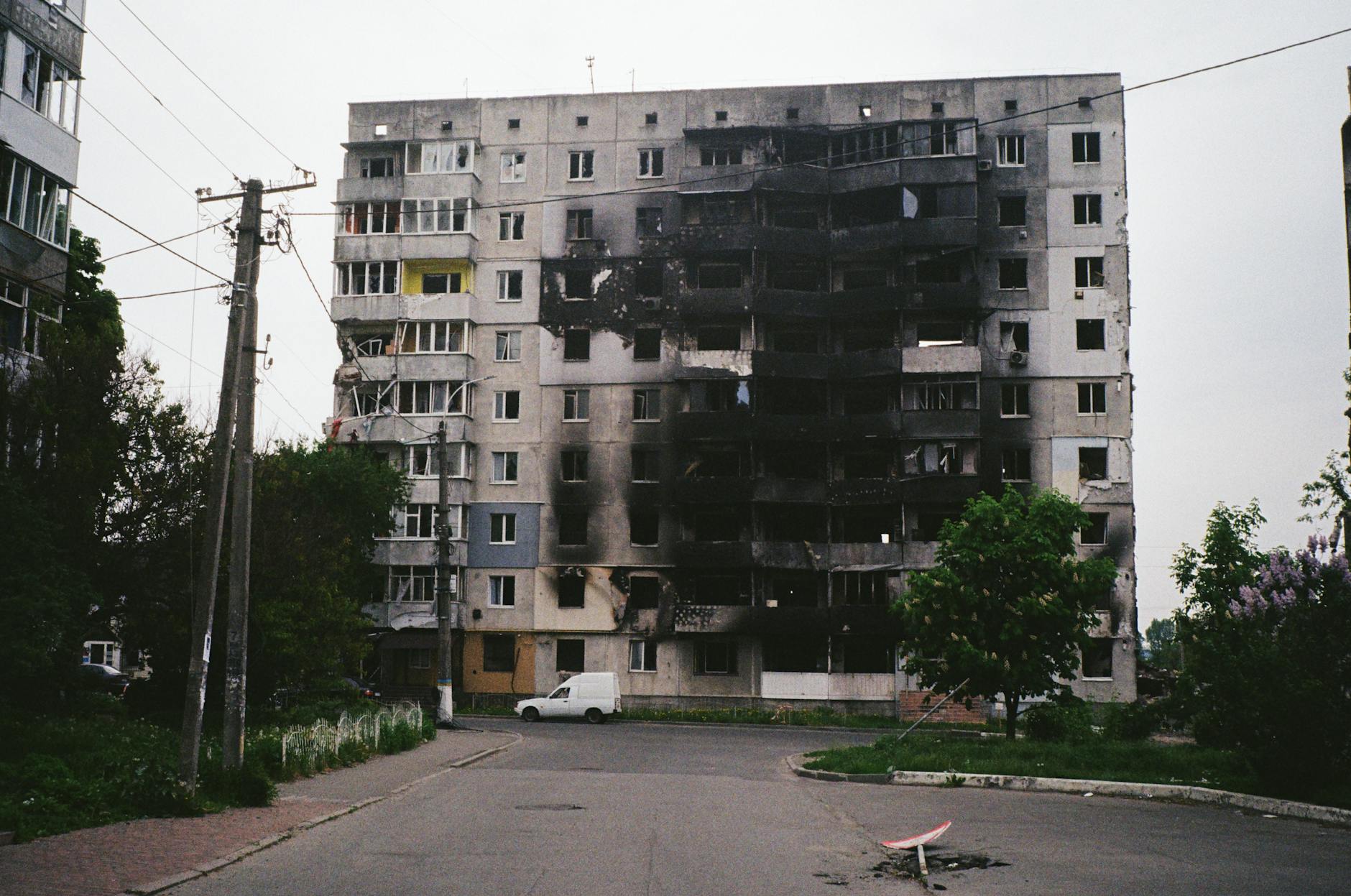
Photo by Mykhailo Volkov on Pexels | Source
6. The Human Cost Is Catastrophic and Often Invisible
Beyond the geopolitical chess match, the human devastation of this war demands attention. Conservative estimates suggest hundreds of thousands of soldiers killed or seriously wounded on both sides. Millions of Ukrainians remain displaced — inside the country and across Europe.
Ukraine's demographic crisis is profound:
- A significant portion of its working-age population has emigrated
- Birth rates have collapsed
- Infrastructure destruction in occupied and contested areas will take decades and hundreds of billions of dollars to rebuild
Even in a best-case scenario where Ukraine achieves a favorable ceasefire, the reconstruction challenge is generational. The Marshall Plan comparison is frequently invoked — and the scale of need is genuinely comparable.
7. The Outcome Will Define Global Order for Decades
Here's the uncomfortable truth that the Foreign Affairs analysis drives home: how this war ends matters enormously beyond Ukraine's borders. A Russian victory — or even a negotiated settlement that rewards aggression — would send a message to every authoritarian regime watching:
- Taiwan and China are watching
- North Korea is watching
- Iran is watching
- Every smaller democracy neighboring a larger authoritarian power is watching
If the post-WWII international norm that borders cannot be changed by force is allowed to erode in Ukraine, the global security architecture that has (imperfectly) kept great-power conflict at bay since 1945 takes a serious hit.
What Happens Next?
The situation is not hopeless, but honest analysis requires acknowledging where things stand. Several scenarios are in play:
- A negotiated freeze along current front lines — likely if U.S. pressure intensifies
- A Ukrainian stabilization if Europe dramatically increases military and financial support
- A prolonged war of attrition with no clear endpoint — the most likely near-term scenario
- Internal Russian instability that changes the calculus — possible but not predictable
What's clear is that the next 12 months will be pivotal. The decisions made in Washington, Brussels, and Kyiv in 2026 will shape the outcome — and the global order — for a generation.
What You Can Do
Stay informed beyond the headlines. Seek out primary sources like Foreign Affairs, the Institute for the Study of War, and reputable European security think tanks. The Ukraine war is not a distant abstraction — its resolution will touch energy prices, global trade, and the security commitments that underpin American alliances worldwide.
The stakes couldn't be higher. And understanding them clearly is the first step toward demanding smart, principled policy responses from your elected officials.
Frequently Asked Questions
Q: Is Ukraine actually losing the war in 2026? According to analysis published in Foreign Affairs, Ukraine is on an unfavorable trajectory — losing ground in the east and facing severe manpower and ammunition challenges. However, the situation remains fluid, and the outcome depends heavily on the level of continued Western support.
Q: What would a Russian victory in Ukraine mean for the U.S.? A Russian victory would embolden authoritarian regimes globally, undermine NATO's credibility, and potentially destabilize Eastern Europe. It would also signal that military aggression can successfully rewrite borders, setting a dangerous precedent for other regional conflicts.
Q: Why has U.S. support for Ukraine decreased under Trump? The Trump administration has expressed skepticism about the strategic value of sustained Ukraine aid and has pushed for a negotiated settlement. This reflects a broader "America First" foreign policy orientation that prioritizes direct U.S. interests over multilateral commitments.
Q: Could a ceasefire deal actually end the war? A ceasefire could pause active fighting, but without strong security guarantees — ideally NATO membership or equivalent — it risks becoming a temporary pause before renewed Russian aggression. Ukraine and many European allies fear a frozen conflict more than an open one.
Q: How long can Russia sustain its military campaign? Despite significant economic strain from Western sanctions, Russia has restructured its economy for wartime production and leveraged support from China, Iran, and North Korea. Most analysts believe Russia can sustain its current level of military effort for the foreseeable future, giving it a structural advantage in a war of attrition.
Frequently Asked Questions
Is Ukraine actually losing the war in 2026?
According to analysis published in Foreign Affairs, Ukraine is on an unfavorable trajectory — losing ground in the east and facing severe manpower and ammunition challenges. However, the situation remains fluid, and the outcome depends heavily on the level of continued Western support.
What would a Russian victory in Ukraine mean for the U.S.?
A Russian victory would embolden authoritarian regimes globally, undermine NATO's credibility, and potentially destabilize Eastern Europe. It would also signal that military aggression can successfully rewrite borders, setting a dangerous precedent for other regional conflicts.
Why has U.S. support for Ukraine decreased under Trump?
The Trump administration has expressed skepticism about the strategic value of sustained Ukraine aid and has pushed for a negotiated settlement. This reflects a broader 'America First' foreign policy orientation that prioritizes direct U.S. interests over multilateral commitments.
Could a ceasefire deal actually end the Ukraine war?
A ceasefire could pause active fighting, but without strong security guarantees — ideally NATO membership or equivalent — it risks becoming a temporary pause before renewed Russian aggression. Ukraine and many European allies fear a frozen conflict more than an open one.
How long can Russia sustain its military campaign in Ukraine?
Despite significant economic strain from Western sanctions, Russia has restructured its economy for wartime production and leveraged support from China, Iran, and North Korea. Most analysts believe Russia can sustain its current military effort for the foreseeable future, giving it a structural advantage in a prolonged war of attrition.


