

Introduction
The U.S. military lives in two worlds: the political capital where civilian leaders set policy, and the operational sphere where commanders plan for combat. Right now, that split is especially visible as a senior U.S. general seeks to avoid a direct political clash with former President Donald Trump while simultaneously preparing forces for the possibility of a major confrontation with Iran. That balancing act matters not just in Washington but across the Middle East and for allies worldwide.

Photo by Germannavyphotograph on Pexels | Source
Why this matters now
Tensions with Iran have cycled higher in recent years due to its nuclear program advances, proxy attacks on shipping and regional forces, and asymmetric campaigns by groups aligned with Tehran. U.S. forces and allies are watching closely: any misstep could lead to rapid escalation, threaten shipping in the Persian Gulf, and draw in regional powers.
At the same time, U.S. civil-military relations are unusually fraught. Senior commanders must preserve military readiness and provide options for civilian leaders, while avoiding being pulled into partisan disputes. When a powerful political figure signals a preference for limited or aggressive action, military leaders must remain apolitical but still responsive to civilian direction. That line is fine and often contested.
The general's two priorities
Broadly, the top general’s responsibilities in this situation break down into two complementary but sometimes competing priorities:
- Deterrence and preparedness — ensure forces are postured, trained, and supplied to deter Iranian aggression or, if necessary, execute operations with precision and restraint.
- Political navigation — avoid being seen as taking sides in domestic politics, maintain trust with civilian leadership (including the administration and Congress), and preserve the military’s institutional credibility.
Both priorities are essential. Weak deterrence risks emboldening adversaries; overt political entanglement risks undermining civilian control of the military.
Concrete steps the military takes
To reconcile these priorities, military leaders typically pursue a set of practical actions. Many of these are public and repeated across contingencies; they reflect prudent planning rather than policy advocacy.
- Force posture adjustments: repositioning carriers, amphibious assault ships, and prepositioned equipment; rotating additional air and missile-defense assets into the region.
- Contingency planning: developing graduated war plans that range from defensive strikes and partner support up to sustained campaign options; refining rules of engagement to limit escalation.
- Logistics and munitions readiness: auditing stockpiles, ensuring resupply chains, and coordinating allies for basing and logistics support.
- Intelligence, surveillance, and reconnaissance (ISR): increasing real-time monitoring of Iranian forces, proxies, and maritime choke points.
- Political-military coordination: frequent briefings to the National Security Council, Congress, and coalition partners to align objectives and avoid surprises.
These steps let commanders deliver realistic options without forcing political decisions on civilian leaders. They also serve as insurance — a way to be ready if a crisis accelerates.

Photo by August de Richelieu on Pexels | Source
The legal and political lines commanders must respect
U.S. commanders operate under strict civilian control and legal frameworks. Key constraints include:
- Presidential authority vs. Congress: The president has broad authority to use force in self-defense, but extended or large-scale hostilities traditionally require Congressional authorization under the War Powers Resolution and constitutional practice.
- DoD policy on political activity: Active-duty officers are prohibited from engaging in partisan political advocacy or public criticism of elected officials.
- International law and coalition commitments: Operations must consider the law of armed conflict and coalition rules of engagement when partners are involved.
A general’s public statements, briefings, or posture moves can be scrutinized for their political implications. That scrutiny intensifies when major political figures amplify or criticize military options in public.
Risks of the balancing act
Trying to thread the needle carries real risks:
- Perception of politicization: If the public or Congress believes the military is aligning with or resisting a political figure, trust erodes — damaging recruitment, morale, and long-term civil-military relations.
- Operational friction: Political pressure to deliver quick or dramatic results can push civilian leaders toward strategies that undercut carefully calibrated military plans.
- Escalation by proxy: Iran’s network of allied militias (in Iraq, Syria, Lebanon, and Yemen) can spark broader conflict even if Tehran seeks to limit direct confrontation.
- Allied unease: Allies and partners prefer predictability; sudden political shifts in the U.S. make coalition planning harder and can push partners to hedge.
What escalation could look like
Military planners use scenarios to map escalation pathways and identify control points. Typical stages include:
- Provocations and deniable strikes — attacks on commercial shipping or proxy strikes against U.S. personnel or facilities.
- Limited U.S. responses — pinpoint strikes on specific facilities or commanders designed to deter without provoking full retaliation.
- Proxy retaliation — militias or state-aligned actors respond against U.S. bases or regional allies.
- Broader campaign — escalation into targeting critical infrastructure, airfields, or sustained maritime interdiction.
At each step, commanders and civilian leaders must weigh military effectiveness, civilian costs, and diplomatic fallout. The goal is to maintain control over escalation, but sheer complexity and asymmetric responses make that difficult.
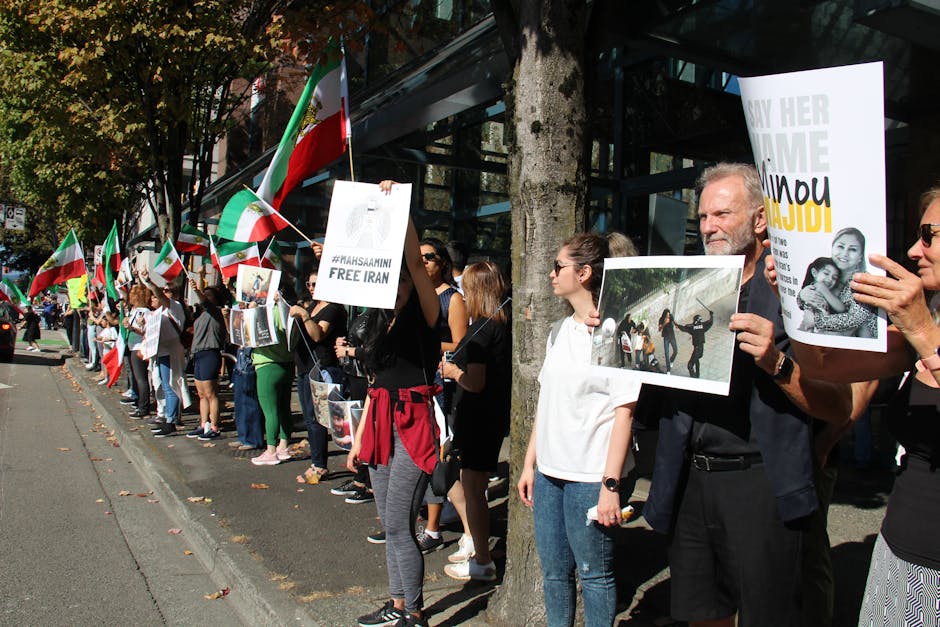
Photo by Sima Ghaffarzadeh on Pexels | Source
How allies and partners shape the calculus
U.S. military planning doesn't happen in isolation. Key partners — Israel, Gulf states, NATO members, and regional players — influence both deterrence and campaign options:
- Basing and logistical support from Gulf partners can extend reach and sustain operations.
- Intelligence sharing improves targeting and reduces the risk of mistakes that cause civilian casualties.
- Political cover from allies can make limited strikes more credible and less domestically contentious.
However, partners also have their own red lines and domestic politics, which can constrain coalition responses and complicate interoperability.
What you should watch next
If you want to follow how this balancing act unfolds, watch for concrete indicators that show movement from posturing to action:
- Increased U.S. naval and air deployments to the Persian Gulf and eastern Mediterranean.
- Public or closed-door briefings to Congress signaling contingency plans or requests for authorities/funding.
- Notices to commercial shipping about threat levels or route advisories.
- Coordinated statements or actions by allies (basing agreements, intelligence-sharing announcements).
- Evidence of Iranian proxy activity — attacks on shipping, Iraqi or Syrian bases, or Houthi missile/drone strikes.
These are measurable signals that are often reported by defense officials, major outlets, and regional monitoring groups.
What this means for citizens and policymakers
For U.S. citizens, the situation underscores how domestic politics can intersect with foreign policy in ways that affect national security. What you can do:
- Expect debates in Congress and read beyond headlines — look for authorization requests, budgets, and classified briefings summarized for lawmakers.
- Follow reputable defense and international outlets for updates on deployments and diplomacy.
- Ask elected officials how they would provide oversight or authorization for prolonged operations.
For policymakers and leaders, the advice from military professionals typically centers on clarity and restraint:
- Provide clear politico-strategic objectives before military action begins.
- Ensure robust legal and congressional consultation to preserve democratic norms.
- Build and sustain allied coalitions to share burden and legitimacy.
Conclusion
The top general’s balancing act — staying ready for war while avoiding domestic political entanglement — is a classic but sharpened challenge in 2026. With Iran-related tensions capable of producing rapid escalation through proxies or miscalculation, military readiness remains essential. Equally essential is preserving the apolitical stance of the armed forces and ensuring civilian leaders provide clear, lawful direction.
You should care because the consequences extend beyond the U.S.: shipping lanes, regional stability, and allied security are all on the line. Watch the posture moves, the congressional conversations, and allied statements — they’ll tell you whether deterrence is holding or whether the region is moving toward a more dangerous chapter.
Key takeaways
- The general must reconcile operational preparedness with strict norms against political activity.
- Preparedness steps include posture, planning, logistics, ISR, and alliance coordination.
- Risks include politicization, proxy escalation, and allied fragmentation.
- Citizens should follow deployments, congressional actions, and allied signals to gauge risk.
If you want a follow-up, I can map specific indicators to public sources and media feeds so you can track developments in real time.


